
Stowarzyszenie „NIGDY WIĘCEJ” zaprasza do współpracy wolontariackiej osoby zainteresowane edukacją o prawach człowieka.
 Zapraszamy do wspólnych działań osoby, które są zainteresowane pracą z młodymi ludźmi, potrafią nawiązać z nimi dobre relacje, wsłuchać się w ich głos, a jednocześnie w przystępny sposób przekazywać własne treści. Szukamy osób z pasją, które byłyby gotowe kształtować postawy otwartości i dialogu, a także zaciekawić młodzież szeroko rozumianą innością: kulturową, językową czy narodowościową.
Zachęcamy do kontaktu osoby, które posiadają wiedzę na temat mowy nienawiści, a także mechanizmów dyskryminacji. Równie istotne są dla nas zagadnienia związane z przeciwdziałaniem nienawiści; znajomością sytuacji grup mniejszościowych i ich postulatów; a także kwestie standardów etycznych w debacie publicznej.
Co można zrobić? Przede wszystkim wesprzeć nas w przygotowaniu i poprowadzeniu zajęć edukacyjnych i warsztatów poświęconych przeciwdziałaniu ksenofobii i innym uprzedzeniom. Stowarzyszenie „NIGDY WIĘCEJ” regularnie prowadzi krajowe i międzynarodowe szkolenia i warsztaty dla uczniów i studentów, nauczycieli, działaczy społecznych, osób należących do mniejszości, urzędników, pracowników firm.
Dzięki tym zajęciom chcemy pokazać, dlaczego warto reagować na mowę nienawiści w sieci i poza nią oraz promować takie wartości jak przyjaźń i szacunek dla odmienności w miejscu zamieszkania, nauki i pracy. Zachęcamy do podejmowania działań na rzecz budowania kultury pokoju i wolnej od ideologicznej uzurpacji pamięci o historii.
Dążymy do tego, aby w Polsce dobrze się czuły osoby należące do mniejszości narodowych, etnicznych czy wyznaniowych, osoby z niepełnosprawnościami, a także LGBT. W tym szczególnie trudnym momencie zależy nam również na wspieraniu uchodźców z Ukrainy i reagowaniu na przejawy niechęci wobec nich. W pierwszych miesiącach agresji Rosji przeciwko Ukrainie, w obliczu wielkiej liczby uchodźców wojennych, polskie społeczeństwo zareagowało olbrzymią falą solidarności, gościnności i pomocy. Jednak obok licznych gestów wsparcia dla walczącej o wolność Ukrainy pojawiły się też próby podsycania niechęci wobec uchodźców, a nawet otwartego usprawiedliwiania putinowskiej inwazji. Właśnie dlatego zajęcia poświęcone dyskryminacji i ksenofobii wydają się dziś szczególnie istotne. Także Ty możesz wziąć udział w ich organizacji i przebiegu!
Zapraszamy do prowadzenia zajęć w języku polskim, angielskim lub ukraińskim (a także w innych językach do wyboru). Co ważne, nasi wolontariusze mają okazję prowadzić spotkania online i na żywo z uczestnikami szkoleń z różnych krajów, zainteresowanych tematem różnorodności i przeciwdziałania dyskryminacji. To szansa na nawiązanie niezapomnianych przyjaźni z ludźmi z całego świata.
Oferujemy: poczucie satysfakcji, udział w istotnej społecznie inicjatywie, doświadczenie współpracy z renomowaną organizacją pozarządową. W razie potrzeby chętnie wystawimy zaświadczenie o współpracy i referencje.
Stowarzyszenie „NIGDY WIĘCEJ” jest niezależną organizacją, która od połowy lat dziewięćdziesiątych prowadzi społeczne kampanie edukacyjne, m.in. „Muzyka Przeciwko Rasizmowi” i „Wykopmy Rasizm ze Stadionów” oraz uczestniczy w projektach przeciwdziałających mowie nienawiści w internecie. Stowarzyszenie prowadzi również dokumentację zdarzeń na tle ksenofobicznym i antysemickim pt. „Brunatna Księga”.
Osoby zainteresowane wsparciem naszych działań edukacyjnych prosimy o kontakt mailowy na adres: redakcja@nigdywiecej.org .

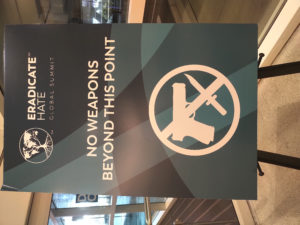 Co-founder of ‘NEVER AGAIN’ Rafal Pankowski participated in the Eradicate Hate Global Summit held in Pittsburgh, Pennsylvania (USA) on 19-21 September 2022. The Summit is the most comprehensive anti-hate conference in the world. It unites experts and leaders from around the globe, who are dedicated to eradicating all forms of hate-fuelled violence. The mission of the Summit is to identify and implement effective solutions for collective change.
 The ‘NEVER AGAIN’ Association is an independent anti-racist organization founded in Warsaw in 1996. It is a member of the International Network Against Cyber Hate (INACH) and the Global Alliance Against Digital Hate and Extremism (GADHE). The Association also takes part in international projects to counteract online hate speech such as ‘Get The Trolls Out’.
 ‘NIGDY WIĘCEJ’ jest powstałą w 1996 roku niezależną organizacją antyrasistowską, która prowadzi kampanie społeczne ‘Muzyka Przeciwko Rasizmowi’ i ‘Wykopmy Rasizm ze Stadionów’ oraz uczestniczy w projektach przeciwdziałających mowie nienawiści w internecie.
 On another festival day a meeting was held with the rock band Strachy na Lachy (Empty Threats) at the information stand of the ‘NEVER AGAIN’ Association. For many years, this group has been involved in the activities of the ‘Music Against Racism’ campaign run by ‘NEVER AGAIN’. Krzysztof ‘Grabaz’ Grabowski, the leader of Strachy Na Lachy, explained his band’s involvement in support of the refugees from Ukraine after the outbreak of the war. Some of the musician’s family came from Volhynia (a previously Polish territory, now a region in Ukraine). In press interviews, ‘Grabaz’ emphasised the importance of having neighbours of different nationalities and how it can lead to outbursts of creativity: ‘If in some place different cultures coexist peacefully with each other, then they will undoubtedly develop that place and its culture’.
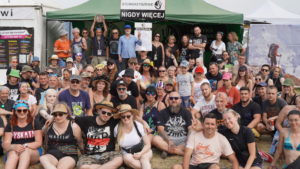 – ‘During our meeting with Strachy Na Lachy, we talked primarily about war and peace, about respect and prejudice in everyday life, about hate speech and how it can lead to violence. We asked the band to explain how music can create a better world,’ said Joanna Naranowicz, a representative of the ‘NEVER AGAIN’ Association and the lead singer of the punk band Qulturka.
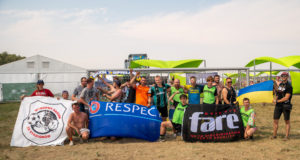
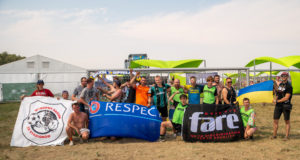
 The ‘Lets’ Kick Racism out of the Stadiums’ tournament has been organised for over twenty years by the ‘NEVER AGAIN’ Association at the Polish Woodstock/Pol’and’Rock Festival. In 2022 it was co-organized with the grass-roots football team FC GAN Pila and supported by FARE network and the Adidas Football Collective through its grassroots support programme. Tournament’s male and female participants jointly express their support for the ideas that guide the entire festival: peace, friendship and respect for diversity. This year, the message resonated particularly strongly with young players from Ukraine who had had to flee the cruelty of war.
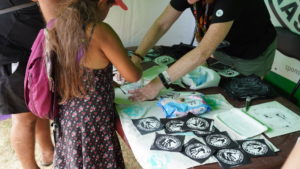 During the Pol’and’Rock Festival, the ‘NEVER AGAIN’ Association also organised educational workshops on volunteering and supporting refugees. At NEVER AGAIN’s information stand, there were also practical worskhops on designing anti-racist DIY sew-on patches and t-shirts with the use of stencils and paints. The resulting items of clothing with the message ‘Music Against Racism’ were presented to the participants!
 W czasie festiwalowych dni na stanowisku informacyjnym Stowarzyszenia ‘NIGDY WIĘCEJ’ odbyło się również spotkanie z kultowym zespołem rockowym Strachy Na Lachy. Od wielu lat grupa ta wspiera kampanię społeczną ‘Muzyka Przeciwko Rasizmowi’.
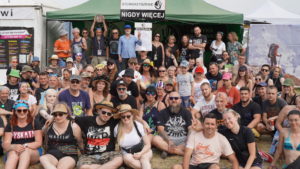 – ‘Podczas spotkania ze Strachami Na Lachy rozmawialiśmy przede wszystkim o wojnie i pokoju, o szacunku i uprzedzeniach w codziennym życiu, o słowach i przemocy, do której mogą prowadzić. Zapytaliśmy też zespół, jaką rolę w budowaniu lepszej rzeczywistości może odgrywać muzyka’ – powiedziała prowadząca dyskusję Joanna Naranowicz, współpracowniczka Stowarzyszenia ‘NIGDY WIĘCEJ’ i wokalistka punkowej kapeli Qulturka.
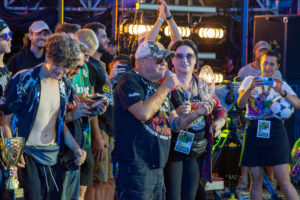 Turniej ‘Wykopmy Rasizm ze Stadionów’ jest od ponad dwudziestu lat organizowany przez Stowarzyszenie ‘NIGDY WIĘCEJ’ na Przystanku Woodstock (obecnie Pol’and’Rock Festival). Jego uczestnicy (i uczestniczki!) wspólnie wyrażają poparcie dla idei, które przyświecają całemu festiwalowi: pokoju, przyjaźni i szacunku wobec odmienności. W tym roku przesłanie to rozbrzmiewało szczególnie mocno za sprawą obecności młodych graczy z Ukrainy, którzy musieli uciekać przed okrucieństwem wojny. Turniej od lat wspiera Jurek Owsiak, który na Dużej Scenie wręcza puchar zwycięskiej drużynie.
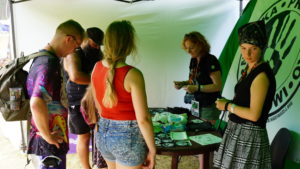 W trakcie Pol’and’Rock Festival Stowarzyszenie ‘NIGDY WIĘCEJ’ zorganizowało również warsztaty edukacyjne na temat wolontariackiej pomocy udzielanej uchodźcom z Ukrainy, a także sposobów przełamywania barier językowych i integracji z nowymi sąsiadami. Na stanowisku informacyjnym odbyły się też zajęcia praktyczne z projektowania naszywek i koszulek z logotypem ‘Muzyka Przeciwko Rasizmowi’ przy użyciu szablonów i farb.
 Pomysłodawcą edukacyjnej akcji ‘Wykopmy Rasizm ze Stadionów’ był śp. Marcin Kornak (1968-2014), wieloletni prezes Stowarzyszenia ‘NIGDY WIĘCEJ’. Kampania ta jest prowadzona od połowy lat dziewięćdziesiątych i ma na celu przeciwdziałanie rasizmowi i dyskryminacji na stadionach. Jest skierowana do kibiców, zawodników, trenerów, sędziów, działaczy sportowych i dziennikarzy. Promuje pozytywny model kibicowania – przede wszystkim szacunek dla różnorodności i postawę fair play.
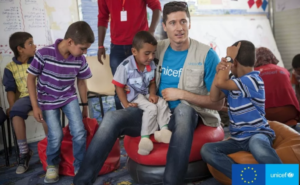 The best player in the history of Polish football and the captain of the Polish national team has been supporting for years people who had to leave their homes due to war and persecution. In May 2014, Robert Lewandowski, as the UNICEF Goodwill Ambassador, visited the Syrian refugee camp in Zaatari, Jordan. At that time, over 100,000 people were staying there, more than half of whom were children. The civil war in Syria has been going on since 2011. According to the United Nations, nearly 12,000 children were killed or injured during the war. Lewandowski, together with two boys, Hisham and Mohammad, visited the place where the children spend their free time, which helps them deal with the traumatic experiences. The footballer appealed: ‘We must be open to the children’s voice. Give them your voice, tell your relatives and friends that there are children all over the world who are waiting for our help and interest. Help us tell their story. Your voice is priceless for these children.’
 The ‘NEVER AGAIN’ Association is an independent anti-racist organization founded in Warsaw in 1996. The ‘NEVER AGAIN’ Association has conducted the first anti-racism campaign in Eastern European football, ‘Let’s Kick Racism Out of the Stadiums’ and is a founding member of the Fare network. Since 2005, it has led the ‘Racism-Delete’ campaign, which has the objective of removing antisemitic and racist content from the internet. The ‘NEVER AGAIN’ Association is a member of the International Network Against Cyber Hate (INACH) and the Global Alliance Against Digital Hate and Extremism (GADHE). The Association also takes part in projects to counteract online hate speech such as ‘Get the Trolls Out’ and ‘Open Code for Hate-Free Communication’.
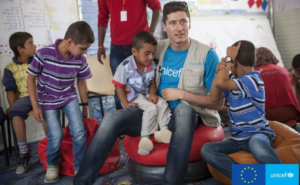 Najbardziej utytułowany zawodnik w historii polskiej piłki i kapitan reprezentacji biało-czerwonych od lat wspiera ludzi, którzy musieli opuścić swoje domy z powodu wojny i prześladowań. W maju 2014 roku Robert Lewandowski jako Ambasador Dobrej Woli UNICEF odwiedził obóz dla syryjskich uchodźców w Zaatari w Jordanii. Przebywało w nim wówczas ponad 100 tys. osób, wśród których ponad połowę stanowiły dzieci. Wojna domowa w Syrii trwa od 2011 roku. Jak podaje ONZ, w tym czasie niemal 12 tysięcy dzieci zostało zabitych lub rannych. Lewandowski wraz z dwoma chłopcami, Hishamem i Mohammadem, odwiedził w obozie miejsce, gdzie dzieci spędzają wolny czas, co pomaga im zapomnieć o traumatycznych przeżyciach. Piłkarz apelował: ‘Musimy być otwarci na wołanie dzieci. Użyczcie im swojego głosu, powiedzcie swoim bliskim i znajomym, że na całym świecie są dzieci, które czekają na naszą pomoc i zainteresowanie. Pomóżcie nam opowiedzieć ich historię. Wasz głos jest dla tych dzieci bezcenny’.
 Dwa dni po rozpoczęciu rosyjskiej inwazji Lewandowski w geście wsparcia dla Ukrainy występował w opasce w barwach flagi tego kraju (podczas meczu Bundesligi Eintracht Frankfurt – Bayern Monachium). Po spotkaniu zamieścił na Twitterze komentarz: ‘Jako sportowiec nie mogę udawać, że nic się nie dzieje. Wspierajmy Ukrainę’. Ponadto Lewandowski przekazał tę wyjątkową opaskę na aukcję charytatywną. Uzyskany dochód (27 tys. zł) przeznaczono na zakup materiałów pierwszej pomocy medycznej i ich transport do Ukrainy. Piłkarz zagrał z żółto-niebieską opaską także w meczu pomiędzy reprezentacjami Polski i Szwecji (29 marca, finał baraży o awans na Mistrzostwa Świata).
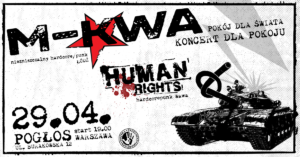 According to the members of Human Rights, ‘The album <Plague> was recorded as a protest against political depravity and the epidemic of intolerance.’ The songs include reflections on ‘what attitudes people adopt in the face of a pandemic, war, dictatorship, lack of mutual respect and tolerance, aggression. It is not without reason that the word <plague> appears in the lyrics of every track.’
 Human Rights is a hardcore punk band from Warsaw. For years, it has been supporting the Music Against Racism campaign of the ‘NEVER AGAIN’ Association. The band describes its work as ‘energetic music and positive and direct lyrics coming out of irritation at intrusive attempts to manipulate our lives only because of differences in sex, views, religion or nationality. So there is fire and fury, there is also some melody and catchy choruses about freedom, respect, compassion, tolerance.’
 The ‘NEVER AGAIN’ Association encourages musicians, record labels and promoters from all over the world who are interested in releasing music tracks or videos as well as organizing concerts with the promotional support of the Music Against Racism campaign to get in touch via email:
 The event, entitled ‘The Urgent Need for Action Against Online Harms: Global Stories From Frontline Activists’, was held virtually. Speakers included Alliance members, researchers, and people directly harmed by online hate from Iraq, Poland, Myanmar, and the United States.